
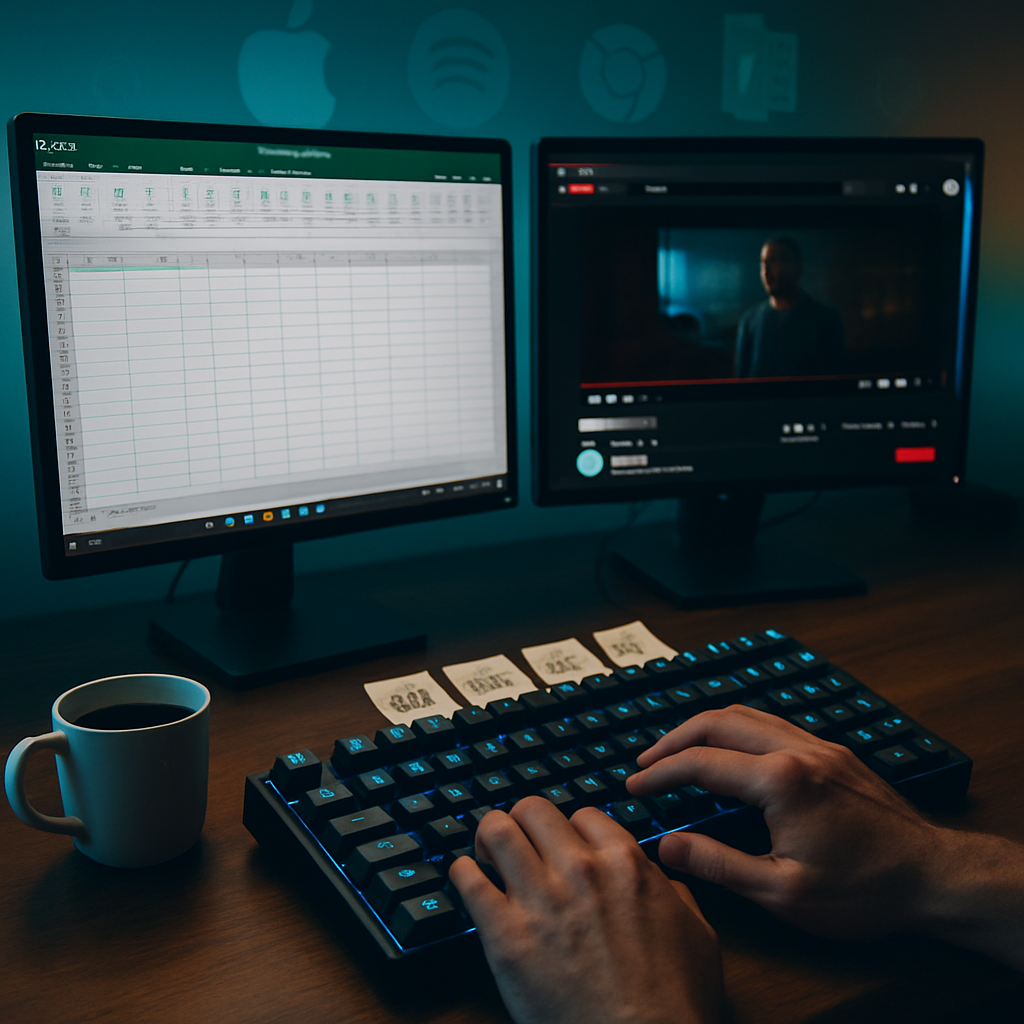
In a world where every keystroke counts, keyboard shortcuts are the invisible turbocharger for your day. Mastering keyboard shortcuts can shave minutes off repetitive tasks, reduce context switching, and empower you to focus on the work that matters. From Mac and Windows keyboards to Excel cells and YouTube workflows, a well chosen set of shortcuts scales your productivity across apps and devices. Whether you are coding, designing, or organizing data, the right shortcut habit changes everything.
Keyboard shortcuts are more than handy tricks; they are a philosophy of work. They compress actions into a small gesture and keep your hands on the keyboard where they belong. This cross platform skill set helps you move between tasks like data entry, video editing, and web browsing with fluidity. As you read, imagine the moment you reach for a combo that saves you from hunting menus or mousing across a crowded screen.
In this guide you will find practical patterns you can apply tomorrow. We cover the essentials you should memorize, platform specific advantages for mac keyboard shortcuts and windows keyboard shortcuts, and the best practices for Excel, Chrome, YouTube, and creative suites like After Effects and Blender. The goal is clear: fewer clicks, faster results, and less fatigue over long sessions.
What makes keyboard shortcuts a fast track to productivity
Shortcuts reduce friction by turning common actions into one key combination. They shrink the gap between intention and action, so your hands stay on the keyboard and your focus stays on the task. Across Mac and Windows, shortcuts can unify your workflow from text editing to multimedia work. The payoff is measurable: less time spent navigating menus, less cognitive load, and a smoother rhythm to your day.
Smart shortcuts also scale across devices and apps. When you know the same pattern for copy paste or unsaved work prompts, you can transfer that muscle memory from Excel to a browser tab, from Chrome to YouTube, and from After Effects to Premiere Pro without relearning each interface. The consistency matters because it accelerates learning and reduces error rates during peak workloads.
Core keyboard shortcuts you should master
The following patterns appear with remarkable consistency across platforms. Start with these universal actions and then layer in app specific mappings as you grow confident.
Mac and Macbook essential shortcuts start with the Command key as the central control. Command-C copies, Command-V pastes, Command-S saves, and Command-P prints. Command-Q finishes an app, while Command-W closes a window. Command-Tab switches between running apps, and Command-Space opens Spotlight for fast search. Within Finder, Command-Shift-N creates a new folder and Command-Delete moves items to the trash. In browsers, Command-L focuses the address bar and Command-F initiates Find. These patterns lay a foundation that translates to Apple devices, iPad usage, and even iPhone with external keyboards.
Windows and PC shortcuts rely on Ctrl and the Windows key to unlock speed. Ctrl-C copies, Ctrl-V pastes, Ctrl-S saves, and Ctrl-P prints. Ctrl-Z undoes, Ctrl-Y redoes, and Ctrl-Arrow jumps around data or text in larger blocks. The Windows key plus arrow keys snaps windows, while Ctrl-Tab cycles through open tabs. In File Explorer, Alt-Left Arrow goes back, and Ctrl-Shift-N creates a new folder. Function keys and system level controls, often paired with Fn, handle brightness, volume, and quick toggles on laptops. Practice these patterns in both professional software and everyday tasks to build a transferable skill set.
Excel keyboard shortcuts that move data faster sharpen spreadsheet work. Typical combos include Ctrl-C to copy and Ctrl-V to paste, Ctrl-S to save, and Ctrl-Z for undo. Ctrl-Arrow moves to the edge of a data region, Ctrl-Shift-L toggles filters, and Ctrl-Enter fills multiple selected cells. In Mac Excel, Command acts in place of Ctrl, and Option helps with special character input or advanced edits. Mastering these shortcuts will speed up data cleaning, formula editing, and dashboard assembly across both Windows and macOS versions.
Excel and data workflows: shortcuts that shine
Excel shortcuts save hours in data heavy projects. Copying and pasting with precision, quickly filling down or across, and navigating large worksheets without breaking your flow are daily wins. In addition to the basics, users benefit from building muscle memory for actions like inserting the current date with Ctrl-; or the current time with Ctrl-Shift-; and leveraging F4 to repeat the last command in many contexts. Cross platform parity helps teams work together even if they switch between a Windows PC and a MacBook.
To accelerate data analysis, pair shortcuts with macro actions. In Excel you can assign a macro to a shortcut key to automate repetitive tasks, turning weeks of manual editing into seconds of one click. If you collaborate across platforms, ensure your macro-enabled shortcuts translate between the desktop app and the online version by testing consistency in both environments.
Web navigation and media: Chrome and YouTube shortcuts
Chrome browser shortcuts keep you scrolling, searching, and multitasking with grace. Jump to the address bar with Ctrl-L or Command-L, open a new tab with Ctrl-T, close one with Ctrl-W, and cycle tabs with Ctrl-Tab. Refresh, reload, and focus the page quickly using familiar combos. YouTube shortcuts reduce the friction of watching and learning; press K to play or pause, J and L to rewind or fast forward, and M to mute. These keystrokes let you skim content or study video tutorials without leaving your keyboard.
When working across web apps, remember that many shortcuts are context dependent. A menu may steal a key moment, or a browser extension might register the same combination for a different action. If a shortcut stops working, check the focused element, disable conflicting extensions, and confirm the app supports the mapping you are using. Consistency matters, but flexibility matters more when you encounter integrations and updates.
Mobile and tablet realities: iPad, iPhone, and Android
On iPad and iPhone, external keyboards open up a world of mac style shortcuts. You can use Command-C, Command-V, Command-S, and many Finder or app specific commands. The on-screen keyboard often includes accent options through long presses, but an external keyboard helps you rely on familiar combos for speed and accuracy. On Android tablets, external keyboards map closely to Windows shortcuts for most apps, with launcher options to tailor key mappings for frequent tasks. The goal is a seamless transition from desktop to mobile environments without losing speed.
Accent marks and non English characters become smoother with shortcut support. Mac users can access accented letters via Option combos, while Windows users utilize Alt codes or international keyboards. When typing in multiple languages or creating multilingual documents, these shortcuts reduce interruptions and keep your flow intact.
Accent marks and symbols: typing with confidence
Typing accented characters is often necessary for labels, notes, and emails. Accent aware shortcuts save time and reduce errors. On macOS you can combine Option with a base letter to generate characters like é, ñ, or ü. Windows users often rely on Alt codes or the US International layout to achieve the same results. Apps such as Excel, Word, and Google Docs preserve these mappings, so you can enter multilingual content without hunting for symbols.
For emojis and symbols, many apps offer quick access via a symbol menu or a dedicated panel. Keyboard shortcuts can expedite insertion during creative tasks, design reviews, or collaborative messages. By building a small repertoire of accent and symbol combos, you remove friction in both professional and personal communications.
Anki and study tool shortcuts for faster learning
Anki users can harness a handful of shortcuts to accelerate spaced repetition. Common combos include Space to reveal the next card, J and K to rate or flip cards, and Ctrl-Enter to add new cards on some platforms. Syncing across devices ensures you retain a consistent shortcut set and a smooth study rhythm. As you study, a well tuned shortcut habit reduces cognitive load and keeps you in a steady learning cadence.
Integrating Anki with your broader shortcut practice means you bring those speeds into notes, writing, and coding tasks. When you can flip, reveal, and navigate with a handful of keystrokes, your entire workflow feels lighter and more controlled. Consistency across devices makes the habit repeatable and reliable over time.
Troubleshooting: when keyboard shortcuts stop working
Shortcuts can stall due to conflicts with other apps or custom bindings. Start by ensuring the correct app has focus and that a plugin is not hijacking the keys. Many programs offer a shortcuts manager to rebind keys and resolve clashes. On Windows, check the input language and keyboard layout; on Mac, verify in System Preferences > Keyboard > Shortcuts. If a single app behaves oddly, test with a fresh profile or safe mode to isolate the issue.
Another common cause is the presence of multiple keyboards or language switches mid task. If you notice inconsistent behavior after a hardware change, try reconnecting or updating drivers. A predictable, conflict-free environment ensures your shortcuts stay reliable when you need them most.
Customizing shortcuts: tailor-made speed
Most apps let you customize shortcuts to match your workflow. In Excel you can bind macros to key combos for repetitive tasks. In Word, Docs, or Sheets you can map frequently used actions to a single keystroke. System level shortcuts on macOS and Windows let you harmonize your environment so you enter a consistent rhythm across apps. Start with two or three new bindings you will actually use, then expand as you gain confidence.
When designing a shortcut strategy, pick actions you perform dozens of times per day. For example, quick paste, quick save, and quick search are strong candidates for early bindings. Over time, your personalized map becomes a reliable backbone for your daily workflow, enabling faster iteration and fewer context switches.
Practical plan to practice and embed shortcuts
Learning is a habit, not a one off. Set a 10 minute daily routine to review and rehearse key combos. Create a small cheat sheet for the apps you use most, with the top five shortcuts for each. Use a spaced repetition approach and gradually expand to more apps like After Effects, Premiere Pro, Blender, and AutoCAD as needed. The goal is to reduce thinking time so you act instinctively rather than hunt for menus.
Pair practice with real tasks. Choose a project this week and identify five shortcuts that would streamline the work. Track time saved and measure the improvement in accuracy and speed. With deliberate repetition, the shortcuts you rely on become second nature, unlocking a smoother, more confident workflow.
Cross platform patterns you can apply everywhere
There are universal patterns that repeat across software. The basic copy, paste, and save commands stay the same whether you are in a spreadsheet, a browser, or a design tool. Ctrl or Command for core actions, Tab to navigate forward, Shift-Tab to go back, Escape to exit dialogs, and Delete to clear selections form the backbone of speed. Building fluency with these shared patterns makes it easier to transfer knowledge from Excel to browser to design apps and back again.
As you become comfortable with these patterns, you will find yourself applying them to specialized programs such as AutoCAD, Blender, or Ableton. The familiarity creates momentum, and momentum is the essence of productive work. Keep reinforcing the patterns with deliberate practice sessions and short reviews at the end of your day.
Shortcuts for popular tools and ecosystems
Beyond the basics, specialized apps require context specific mappings. In AutoCAD and Blender, hotkeys speed up drafting and modeling workflows. In After Effects and Premiere Pro, keyboard shortcuts accelerate composition, rendering, and timeline editing. In Ableton, shortcuts control playback and editing with precision. Bluebeam and Canva likewise benefit from a compact set of motions for markup and design tasks. The more you learn, the more you unlock a smooth, intuitive workflow across your toolkit.
As your toolset grows, create a lightweight reference that lives on your desktop or in a notes app. A well organized cheat sheet helps you recall new bindings during demanding projects. The aim is not to memorize every shortcut at once, but to add meaningful moves that you actually use and rely on daily.
Getting started today with a quick win
Begin with a short list of five universal shortcuts you will use in most tasks this week. Practice them in real work, track your speed, and note where you still hesitate. Add a second set for your most used apps, then expand as you gain confidence. The goal is not complexity but clarity and flow. With a small, intentional investment, you can transform long days of clicking into a fast, confident routine of keyboard mastery.
Remember that consistency beats intensity. A steady habit over 21 days compounds into lasting skill. Choose a single focus area this week, master it, and move to the next with deliberate practice. Your future self will thank you for the quiet power of a well tuned keyboard.
As you wrap up this guide, commit to one actionable step: map five shortcuts for your daily driver app, print or save a mini cheat sheet, and use it in your next work sprint. The moment you replace hesitation with a practiced keystroke is the moment your productivity takes a meaningful leap.