
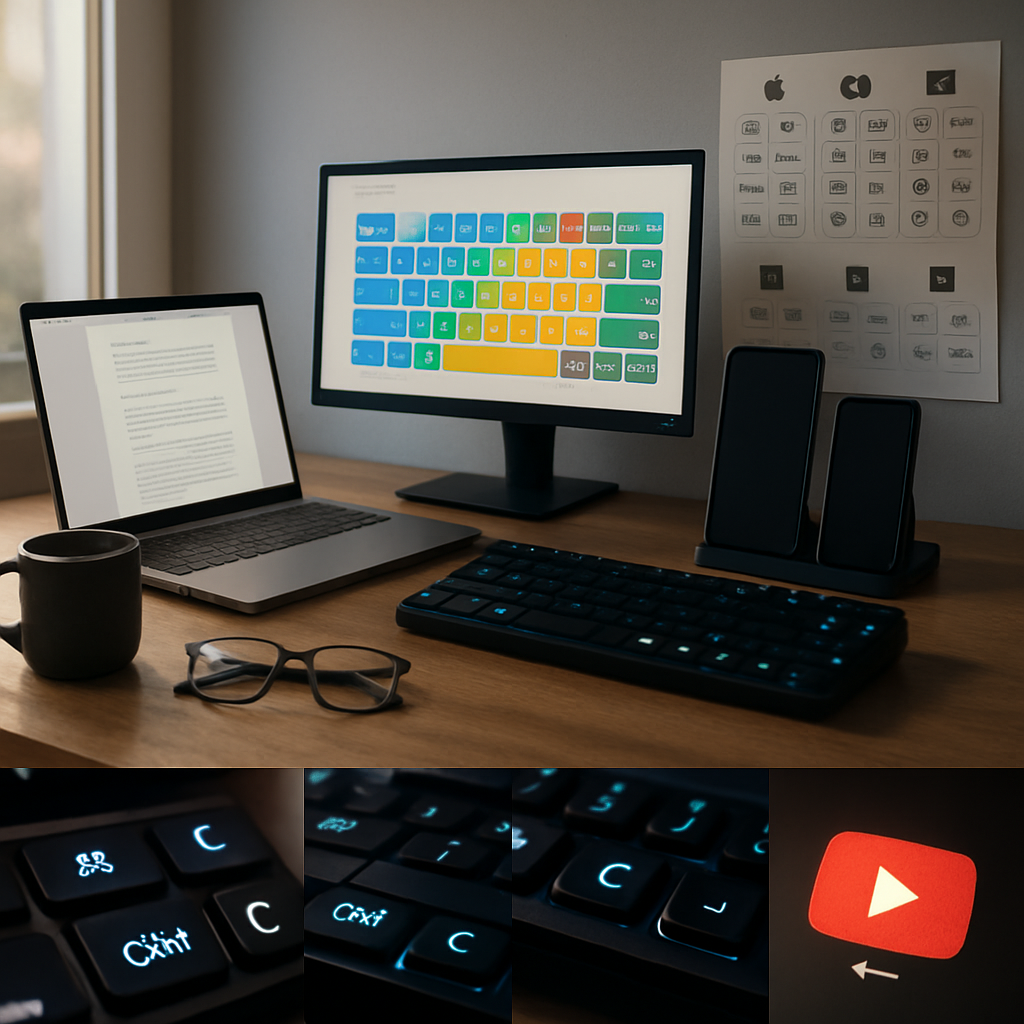
If you want to shave minutes off every workday, keyboard shortcuts are your most reliable productivity tool. From Mac keyboard shortcuts to Windows tricks and Excel hacks, mastering them transforms how you navigate apps, documents, and the web. In this guide, you’ll discover practical keyboard shortcuts across Mac, Windows, YouTube, Chrome, and a host of essential apps, so you can work faster with less friction. Whether you’re a student, a designer, or a professional juggling multiple programs, shortcuts empower you to stay in flow and reduce repetitive strain.
Why Keyboard Shortcuts Matter Across Platforms
Keyboard shortcuts are not a luxury; they are a throughput multiplier. When you use them, you switch from hunting menus to executing actions in milliseconds. Across platforms—macOS, Windows, iPadOS, and Chrome OS—shortcuts help you perform copy, paste, undo, and navigation tasks without leaving the keyboard. They also reduce fatigue by minimizing mouse interactions. In practice, a few well-chosen shortcuts can slash task times in half, freeing mental bandwidth for the creative or analytical parts of your work.
In addition to speed, shortcuts improve accessibility and accuracy. For instance, alternate shortcuts for accented letters and emoji shortcuts can streamline writing in multiple languages. If you’re integrating tasks across Excel, AutoCAD, After Effects, or Ableton, a consistent mental model for shortcuts helps you switch between tools without re-learning the basics. The result is a smoother, more confident workflow—whether you’re drafting a report, editing a video, or composing music.
Keyboard Shortcuts by Platform: A Quick Roadmap
Before diving into the specifics, it’s useful to map shortcuts to your primary environment. The following sections cover the most common, high-impact shortcuts you’ll use every day, with emphasis on macOS, Windows, Chrome, and mobile devices such as iPad and iPhone. You’ll also find guidance on customizing shortcuts for apps like Excel, AutoCAD, Premiere Pro, After Effects, and Blender. Transitional tip: start with a core set of 8–12 proven shortcuts, then layer in specialized ones as you gain confidence.
Mac and MacBook Shortcuts
On a Mac, many shortcuts rely on the Command (⌘) key in combination with letters or other keys. A good starting set includes ⌘C for copy, ⌘V for paste, ⌘X for cut, ⌘Z for undo, and ⌘S for save. For quick window management, try ⌘M to minimize the active window or ⌘Tab to switch apps. Remember to use ⌥ (Option) for accents and alternate characters, which is especially handy when you’re typing in multiple languages or writing technical documentation. If you’re editing in apps like Final Cut Pro, After Effects, or Logic Pro, you’ll often find context-specific shortcuts that dramatically shorten your editing loops.
Windows and Windows 11 Shortcuts
Windows shortcuts emphasize Ctrl, Alt, and the Windows key. Core actions include Ctrl+C, Ctrl+V, Ctrl+X, Ctrl+Z, and Ctrl+S, with Windows key shortcuts like Win+D to show the desktop or Win+L to lock the device. For browser efficiency, Ctrl+T opens a new tab and Ctrl+W closes the current one. In a productivity stack that includes Excel and PowerPoint, F2 to rename a selected file or cell, and Ctrl+Shift+L to apply filters, can shift your workflow into a higher gear. If you use Adobe Premiere Pro or AutoCAD, the ability to customize or remap these keys is a powerful way to tailor the keyboard to your project pipeline.
Chrome, YouTube, and Web Apps Shortcuts
The browser is a shortcut-rich environment. In Chrome, use Ctrl+L or Alt+D to jump to the address bar, Ctrl+T for a new tab, and Ctrl+K for quick search. YouTube shortcuts like J (rewind 10 seconds), L (fast-forward 10 seconds), and Space to pause can turn video consumption into a more precise editing or review process. In web apps such as Google Docs or Sheets, many shortcuts mirror the desktop experience, so you can transfer your muscle memory seamlessly between offline and online workspaces.
Mobile Keyboard Shortcuts: iPad, iPhone, Android
Mobile platforms support a surprising number of shortcuts when you pair a hardware keyboard. On iPad and iPhone with a connected keyboard, you’ll find familiar combinations like ⌘C and ⌘V, along with trackpad gestures for navigation. Android devices often rely on keyboard shortcuts within Chrome and various apps, but the best gains come from combining hardware keys with app-specific actions, such as editing in CapCut or moving between cells in mobile Excel. If you frequently annotate or add accents, learning the right accent shortcuts on iPad or Android devices can speed multilingual writing significantly.
Common Shortcuts You Should Know Across Apps
Some shortcuts are universal, and knowing them pays dividends in almost every app you use. Here are essentials to memorize early in your learning journey. For brevity, I’ve grouped them by task rather than by platform, so you can map them to your most-used devices quickly.
- Copy, Paste, Cut: Ctrl/Cmd+C, Ctrl/Cmd+V, Ctrl/Cmd+X
- Undo/Redo: Ctrl/Cmd+Z, Ctrl/Cmd+Shift+Z
- Save and Open: Ctrl/Cmd+S, Ctrl/Cmd+O
- Find in Document: Ctrl/Cmd+F
- Select All: Ctrl/Cmd+A
- New Tab: Ctrl/Cmd+T; Close Tab: Ctrl/Cmd+W
- Screenshot Quick Save (system dependent): Print Screen or ⌘Shift4 (Mac)
Beyond these staples, you’ll want to learn app-specific shortcuts. For example, in Excel, Ctrl+Shift+L toggles filters, and F2 edits a selected cell. In AutoCAD, lasso into commands with shortcuts like C for Circle or X for Trim. In After Effects and Premiere Pro, keyboard shortcuts for cutting, selecting, and layering accelerate your video workflow dramatically. The more you map these actions to keystrokes, the more your hands stay in motion and your eyes stay focused on the task at hand.
Productivity Wins: Shortcuts for Excel, AutoCAD, After Effects, Ableton, Blender, and Revit
Industry-specific tools reward a tailored shortcut repertoire. Below are pragmatic packs you can adopt as a baseline, then expand as you master each environment. The goal is to reduce context switching and keep your hands on the keyboard as you work through complex tasks.
Excel: Fast Data and Formula Work
Excel shortcuts save hours when you handle large data sets. Start with navigation shortcuts like Ctrl+Arrow keys to jump across data, Ctrl+Shift+L to toggle filters, and Ctrl+Space to select an entire column. For formulas, F2 edits the active cell, and Ctrl+Shift+Enter creates array formulas when supported. If you frequently adjust formatting, Ctrl+1 opens the Format Cells dialog, enabling rapid style changes without the mouse.
AutoCAD: Precision Drafting
AutoCAD users benefit from a streamlined command line workflow. Shortcuts like L for Line, C for Circle, X for Trim, and E for Erase speed up drafting. Customizing your own shortcut set allows you to create a personalized toolkit that mirrors your regular design patterns. Mastery here reduces hand fatigue during long sessions and helps you iterate designs with confidence.
After Effects: Stellar Motion Graphics
In After Effects, speed comes from combining shortcuts for layers, timelines, and effects. Shortcuts such as V for Selection, G for Pen, and Ctrl+K (Cmd+K on Mac) to set composition keys help you sculpt motion quickly. Keyframes, previews, and render queues all benefit from a consistent shortcut language so you can focus on the artistic decisions rather than the interface.
Premiere Pro: Editing Efficiency
Premiere Pro users rely on shortcuts to cut, ripple delete, and navigate the timeline. Key players include C for Razor Tool, V for Selection Tool, and Space to play/pause. Jump to start or end with Home/End, zoom the timeline with + and -, and render previews with Enter. A well-mapped set cut your editing cycles in half and keep pace with tight production timelines.
Ableton: Beat Making and Arrangement
Music production benefits from keyboard shortcuts that quicken device arming, clip launching, and device parameter tweaks. Learn deviations like Cmd/Ctrl+T to create a new MIDI track, Space to start/stop, and Cmd/Ctrl+↑/↓ to transpose, allowing you to tune arrangements without using the mouse. Blend these with keyboard shortcuts for editing and launching clips to maintain musical momentum.
Blender: 3D Workflow Momentum
Blender’s dense interface becomes manageable when you internalize core shortcuts: G for Grab/Move, R for Rotate, S for Scale, A to select all, and Ctrl+Z for undo. The 3D viewport responds quickly to shortcuts for switching modes, viewport shading, and object editing, letting you iterate designs, lighting, and materials more intuitively. Custom hotkeys for frequently-used modifiers can dramatically cut the learning curve for new projects.
Revit: Building Information Modeling
Revit shortcuts keep BIM workflows efficient, especially when juggling views, families, and annotations. Consistent pairs like W for Wall, C for Circle, and DI for Dimension help you draft more quickly. If you frequently switch between floor plans and elevations, learn view navigation shortcuts and how to place dimensions with a few keystrokes to maintain project momentum.
Accessibility, Custom Shortcuts, and Language Tips
Customizing shortcuts is a powerful way to align your keyboard workflow with your personal and team needs. Both macOS and Windows let you rebind keys and create app-specific shortcuts, which is especially helpful in crowded toolchains like Excel, AutoCAD, Premiere Pro, and After Effects. If you work with multilingual text, accent marks and emoji shortcuts can be a real time-saver and help you maintain precise wording across documents, emails, and social content.
When shortcuts stop working, it’s usually due to app-specific overrides, keyboard layout changes, or accessibility features accidentally toggled on. In such cases, a quick reset to default shortcuts or a refreshed keyboard layout can restore your muscle memory. Consider keeping a small, always-available cheat sheet for your most-used apps to avoid memory gaps when you switch projects.
Learning Strategies: How to Build and Remember Shortcuts
To build a durable shortcut habit, start with a core set, then gradually expand. Spaced repetition, deliberate practice, and real-world tasks help embed muscle memory faster than rote memorization. Create a personal grid or notebook where you map each action to a keystroke, and revise it after you complete a project. Make a habit of using the same shortcut across multiple apps whenever possible to reinforce consistency.
Another practical tactic is to group shortcuts by tasks: navigation, editing, formatting, and tool access. This approach makes your mental model easier to recall and reduces cognitive load during busy work sessions. Finally, keep a short printable cheat sheet near your desk for quick reference, and update it whenever you learn a new, high-value shortcut.
Where to Find Cheat Sheets, PDFs, and Tools
There are many reliable resources to extend your shortcut toolkit. Look for printable cheat sheets and platform-wide references that cover Windows, macOS, Chrome, and popular apps like Excel, Blender, and Premiere Pro. Some teams maintain internal guides to ensure everyone uses a consistent shortcut language, which speeds onboarding and collaboration. Practically, you can assemble a custom PDF cheat sheet that targets your most-used programs and print it, so you can skim during a quick break or a long editing sprint.
Putting It All Together: Your Actionable Plan
Start with a focused 15-minute daily drill: pick 6–8 universal shortcuts and practice them across at least two apps you use daily. Then add 2–3 platform- or app-specific shortcuts each week, building a personalized toolkit that addresses your workflow gaps. As you gain confidence, consolidate your shortcuts into a single, portable cheat sheet that you can reference on any device. The objective is simple: stay in the flow, minimize menial actions, and let your fingers do the thinking.
With the right combination of core shortcuts and platform-specific tricks, you’ll notice faster document editing, smoother media production, and more efficient data handling. The result isn’t just speed—it’s better focus, fewer interruptions, and a more enjoyable workday. Give yourself permission to learn at a comfortable pace, and you’ll reap the benefits in shorter project times, higher accuracy, and a stronger sense of control over your digital environment.