
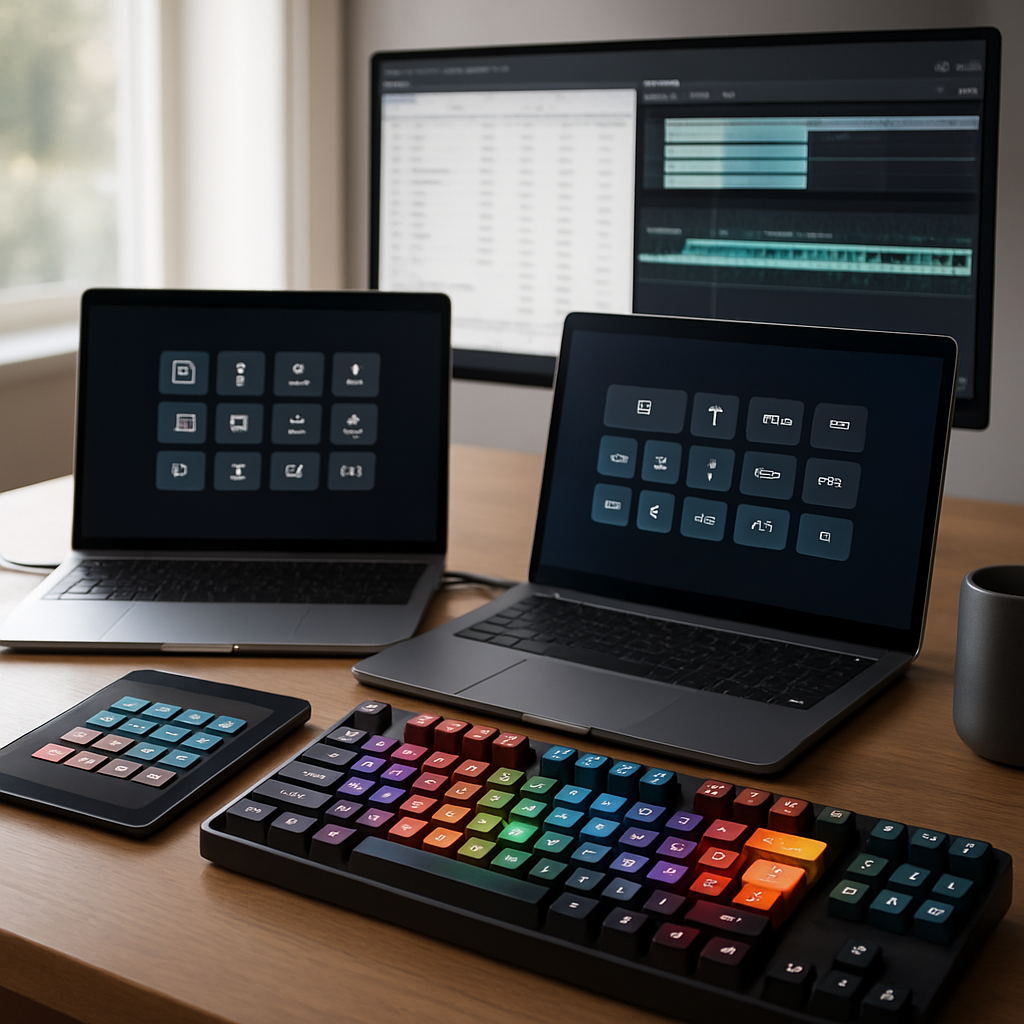
Keyboard shortcuts are the quickest route to speed and precision across your digital everyday. Whether you’re juggling emails, crunching numbers in a spreadsheet, or editing a video project, a handful of well-chosen keystrokes can save hours each week. In this guide, we explore keyboard shortcuts for Mac and Windows, Excel and Google Sheets, YouTube and Chrome, and a spectrum of creative and productivity apps. By focusing on the most impactful combos, you’ll streamline workflows, reduce repetitive strain, and gain more control over your tech toolbox.
What makes a shortcut truly powerful is consistency. When you adopt a small set of core keystrokes and apply them across apps, your fingers learn the rhythm and your mind stays focused on the task. This article uses practical examples you can practice today, with accessible tips for both new users and power users alike. And because shortcuts accelerate every task, reading this guide is a surprisingly low-cost investment in your daily workflow.
Global keyboard shortcuts: speed, precision, and consistency
Global shortcuts work across almost every app, operating system, and browser. The best starting set includes commands for copy, paste, undo, redo, and window management. For example, copying and pasting (copy, paste), selecting all, and undoing an action form the foundation of efficient editing workflows. Once these basics feel automatic, you can layer in app-specific tricks that accelerate specialized tasks such as formatting in a spreadsheet or navigating a web browser with fewer clicks.
Beyond the basics, learn to navigate without the mouse. Keyboard navigation is a productivity multiplier, especially for long documents, data entry, and research tasks. In Chrome or any browser, for instance, you can jump between tabs, reopen closed tabs, and focus the address bar with a few keystrokes. In Excel, you can move around cells, select ranges, and enter formulas without ever reaching for the mouse. The goal is to build muscle memory for actions you perform most often, then extend that memory to new apps as needed.
Mac keyboard shortcuts vs Windows keyboard shortcuts
Mac users rely on the command key for most core shortcuts, while Windows users frequently use the control key. The metaphor is simple: if you know Command, you’ll adapt to similar shortcuts on Windows by substituting Ctrl. This alignment reduces cognitive load and speeds up learning across platforms. For example, copying and pasting is Command+C on Mac and Ctrl+C on Windows, while undo is Command+Z on Mac and Ctrl+Z on Windows.
On Mac, you’ll often see shortcuts that leverage the Option and Control keys for accent marks, symbols, and alternate characters. On Windows, the Windows key opens system-level menus and search features, while on Macs you access system features via the Command key and function keys. To minimize friction, practice a core set of cross‑platform shortcuts first, then expand to platform-specific tricks like macOS shortcuts for screenshots or Windows shortcuts for virtual desktops.
Productivity and office shortcuts: Excel, Word, Google Sheets, and more
In productivity suites, shortcuts become the true time-savers. For Excel, common combos include navigating data with arrow keys, selecting entire rows or columns quickly, and entering formulas without mousing. Excel keyboard shortcuts are essential for anyone who works with data, charts, and financial models. For Google Sheets, the shortcuts mirror Excel in spirit but with browser-based nuances, such as quick insertion of functions, autofilling, and navigation that respects grid logic across multiple sheets.
Word users gain speed with shortcuts for formatting, paragraph alignment, and track changes. When you complement Word shortcuts with Google Docs equivalents, you’ll stay fluid whether you’re drafting a report in a word processor or collaborating in a cloud document. In both environments, building a personal cheat sheet avoids context switching and keeps your hands on the keyboard more often than not.
Creative software shortcuts: After Effects, Premiere Pro, Blender, and AutoCAD
Creative workflows hinge on fast, precise control. After Effects and Premiere Pro shortcuts accelerate keyframes, layers, and timeline editing, while Blender shortcuts streamline 3D modeling, shading, and rendering. AutoCAD shortcuts are a different category entirely, focusing on precision drawing, snapping, and command sequences that maintain accuracy in CAD work. Starting with a core set of editing and navigation shortcuts in these apps dramatically lowers the learning curve and opens room for more advanced techniques.
When learning these tools, it helps to keep a dedicated shortcut chart nearby. Many studios create printable sheets or on-screen overlays so the exact keystrokes become second nature. The payoff is clear: fewer mouse clicks, faster iterations, and more time to focus on creative decisions rather than tool hunting.
Browser and media shortcuts: Chrome, YouTube, Firefox, and more
Web browsers are a daily playground for shortcuts. In Chrome, you’ll benefit from quick tab management, omnibox search, and easy bookmarking. YouTube shortcuts can improve video viewing, skipping ahead or back without reaching for the mouse, adjusting playback speed, and toggling captions. Firefox and other browsers offer similar speedups, with unique shortcuts for developer tools and privacy controls. Building a robust browser shortcut toolkit reduces fatigue when researching, watching videos, or testing web apps.
Media-heavy tasks also benefit from shortcuts for playback, fullscreen toggling, and volume control. If you regularly edit metadata, manage playlists, or switch between media panes, a small set of browser and media shortcuts becomes a reliable productivity backbone that travels with you across projects.
Mobile and tablet workflows: iPad, iPhone, and Android shortcuts
Mobile devices support a surprising number of keyboard tricks, especially when you pair a physical keyboard with a tablet or laptop. iPad and iPhone shortcuts often leverage the on-screen keyboard, plus external keyboards like Apple’s Magic Keyboard for iPad. In iOS, you can navigate apps, switch between apps, and perform text editing tasks with a crisp set of modifier-key combos. Android devices, while more varied by manufacturer, share common shortcuts for text editing, multitasking, and voice input when used with a connected keyboard.
Across mobile platforms, the goal is to carry over the logic of desktop shortcuts. If you routinely switch between devices, consider setting up a portable cheat sheet or using a note in your cloud drive that lists cross‑platform equivalents. Consistency across devices yields a smoother hand‑eye rhythm and fewer mode switches during work sessions.
Accent marks, symbols, and language shortcuts
Typing in multiple languages often requires specialized shortcuts to insert accented letters, special symbols, or diacritical marks. On Mac, you can hold a key to reveal accent options or use the Option key combos to craft characters like é, ñ, or ü. Windows provides a rich set of Alt-code sequences for symbols and accented letters, which can be invaluable when composing in non‑English languages or drafting international documents.
For many users, language shortcuts are a gateway to broader productivity. By memorizing a handful of accent and symbol tricks, you can maintain flow without pausing to search menus. This is especially helpful in emails, reports, or content creation where multilingual communication is common.
Anki, study aids, and other specialized apps
Learning apps like Anki rely on keyboard shortcuts to pace repetition, reveal cards, and navigate decks. Anki keyboard shortcuts help you flip cards, suspend or suspend cards, and switch study modes with speed. If you study across devices, syncing shortcuts or using consistent key mappings ensures you remain in a productive rhythm rather than constantly relearning controls.
Beyond Anki, many niche tools used in design, engineering, or music production offer compact shortcut sets. For example, Ableton and Blender have deep command ecosystems, while CAD tools emphasize precision commands. The common thread is that a compact, well-chosen set of shortcuts scales across both daily tasks and specialized workflows.
Troubleshooting: keyboard shortcuts not working and how to fix common issues
Shortcuts can disappear or stop working for a variety of reasons, from software updates to keyboard layout changes or conflicting hotkeys. If a shortcut ceases to function, start by checking the active application’s menu to confirm the keystroke hasn’t changed. Next, verify your keyboard language and layout settings, since a mismatched layout can produce unexpected results.
When shortcuts stop working system‑wide, inspect the keyboard itself for hardware faults, check for stuck modifier keys, and review any utility software that remaps keys. In some cases, third‑party apps or browser extensions can intercept shortcuts, so disabling or adjusting those extensions can restore normal behavior. Finally, consider resetting shortcuts to a default baseline and re‑building your core set gradually to avoid conflicts.
How to build a personal shortcut cheat sheet that sticks
The most effective shortcut plan starts with a lean core. Choose 10 to 15 keystrokes you use most across your daily tasks, then learn one or two app‑specific additions for tools you rely on heavily. Create a dedicated cheat sheet that groups shortcuts by task (navigation, editing, formatting, and window management) and keep it where you work—on your desktop, in a pinned note, or as a quick reference card next to your monitor.
Practice in short, focused sessions. For example, dedicate 5 minutes to testing a cross‑platform set (copy, paste, undo, redo, save) and then spend another 5 minutes on a single app’s essential toolkit. Over weeks, your accuracy will improve, and your speed will compound. The payoff isn’t just time saved; it’s a calmer, more focused you at the keyboard.
Practical tips for accelerating adoption across devices and apps
To maximize results, design a consistent mapping between platforms. If you memorize Command+C on Mac, adopt Ctrl+C on Windows, and look for analogous mappings in other ecosystems like Chrome, Excel, and your favorite design tools. Also consider customizing shortcuts where possible. Many applications let you redefine keys for your most tedious tasks, turning repetitive routines into near‑automatic motions.
Another practical strategy is layering shortcuts. Start with general commands that work everywhere, then add specialized sequences for your top three tools. For example, your core set could be copy, paste, undo, redo, save, and switch tabs, while your tool‑specific set covers formatting in Excel, editing in After Effects, and navigation in Google Docs. This staged approach lowers cognitive load and sustains momentum.
Finally, measure your progress. Track metrics such as time saved per task, the number of actions performed with the keyboard versus the mouse, and your error rate when learning new shortcuts. Small improvements add up, especially when they compound across projects, teams, and devices.
Whether you’re a student, a professional, or a creator, keyboard shortcuts are a quiet but powerful ally. With a thoughtful starter set, a clear deck of app‑level tricks, and a consistent practice habit, you’ll move faster, think more clearly, and execute with confidence across every platform—from Mac to Windows, from Excel to YouTube, and into the apps that shape your daily work.
Start today by picking a handful of universal shortcuts, map them across your most used apps, and print or save a compact cheat sheet. Then invest a few minutes daily to build fluency in one new shortcut per week. Your future self will thank you for the extra momentum and the clearer focus you’ve earned along the way.