
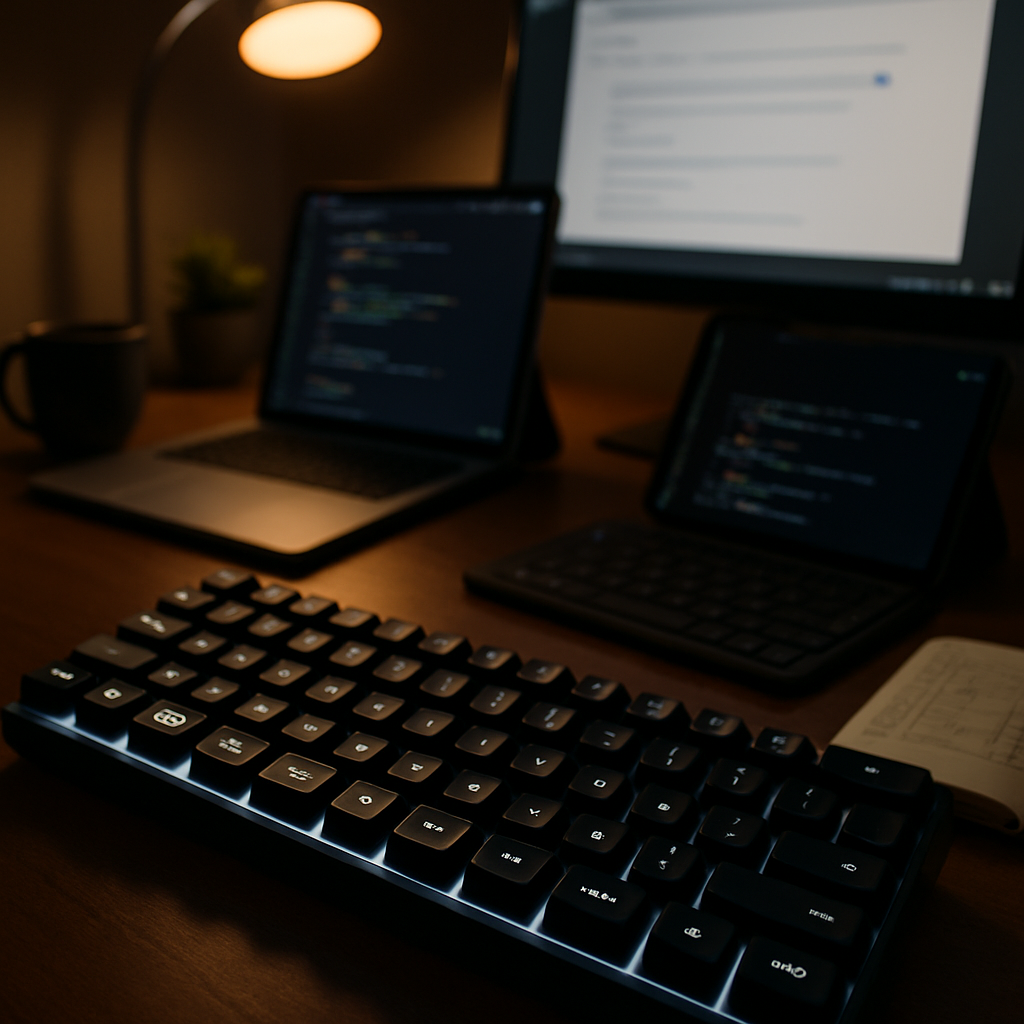
In a world where milliseconds count, mastering keyboard shortcuts is the quiet engineer of productivity. Keyboard shortcuts aren’t just fancy tricks; they’re the fastest path from intention to result. Whether you’re swapping between windows on a MacBook, tabbing through a Chrome session, editing a video in After Effects, or crunching numbers in Excel, the right key combos can save minutes every day. This guide dives into practical, cross-platform shortcuts and app-specific tips to help you move with velocity and confidence.
Why Keyboard Shortcuts Matter in 2026
Keyboard shortcuts compress the distance between thought and action. They reduce context switching, minimize repetitive strain, and empower you to stay in flow. Across devices—Mac, Windows, iPad, Chrome OS, and Android—you’ll find common patterns that let you work faster with less cognitive load. The goal isn’t to memorize every shortcut but to adopt a small, powerful set you can rely on daily, then expand thoughtfully as your tasks demand.
By embracing a cross-platform mindset, you also unlock consistency. If you can copy, paste, undo, and redo with similar keystrokes on your laptop, desktop, and tablet, you’ll waste fewer seconds adapting between environments. And with a solid cheat sheet, you’ll avoid the dreaded search-for-that-menu rhythm that fragment your focus. Let’s map a practical toolkit you can start using today.
A Cross-Platform Toolkit: Mac, Windows, Chrome, and iPad
Most shortcut conventions share common ground, but each ecosystem has its own flavor. We’ll cover the essentials first, then surface platform-specific variations you’ll actually use in everyday work.
Mac Keyboard Shortcuts You Should Master
On a Mac, the Command (⌘) key is your primary multiplier for productivity. Common combos include ⌘C to copy, ⌘V to paste, ⌘X to cut, and ⌘Z to undo. For text navigation, ⌥ (Option) + ← or → moves by word, while ⌘A selects all. If you’re multitasking in documents, ⌘Tab cycles applications, and ⌃ ⌥ ⌘ Powerfully switches you between desktop spaces. For screenshots, ⌘⇧4 lets you capture a chosen area, while ⌘⇧3 captures the entire screen. In browsers, ⌘L focuses the address bar, and ⌘T opens a new tab. Add ⌘F to find within a page or document, and you’ve already got a clean baseline for speed.
Custom shortcuts in macOS can shave minutes off repetitive actions. Open System Settings > Keyboard > Shortcuts to enable, disable, or re-map common tasks. If you frequently manage windows, learning ⌃⌘→ and ⌃⌘← to snap windows to the right or left helps you create a precise, ergonomic workspace without lifting a finger off the keyboard.
Windows Keyboard Shortcuts: The Core You’ll Use Daily
Windows shortcuts often center on Ctrl, Alt, and the Windows key. Start with Ctrl+C, Ctrl+V, Ctrl+X for clipboard actions, and Ctrl+Z for undo. Ctrl+Shift+T reopens the last closed tab, while Windows key + D minimizes all windows to show the desktop. Windows 11 emphasizes accessibility and multitasking with Snap layouts; you’ll use Windows key + Z to view available layouts and Windows key + W to switch to a focused workspace. For text editing, Ctrl+Arrow jumps by word, and Ctrl+Backspace deletes by word. If you regularly switch between apps, Alt+Tab remains the fastest app switcher, with Alt+Shift+Tab reversing direction.
Beyond the basics, Windows users personalize shortcuts via Settings > Accessibility or Settings > Keyboard. Shortcuts for command prompts, developer tools, and file explorers can dramatically cut the time you spend navigating menus. The practical upshot: you don’t just learn shortcuts; you tailor them to your workflow.
Chrome and Chrome OS Shortcuts for Speed
In the browser, shortcuts are your scalpel for precision navigation. Common Chrome shortcuts like Ctrl/Cmd+T for a new tab, Ctrl/Cmd+W to close a tab, and Ctrl/Cmd+Tab to cycle through open tabs are universal anchors. For address bar quick access, Ctrl/Cmd+L or Alt+D burn in the URL instantly. In Chrome OS, many keyboard shortcuts mirror Windows but with a distinct set of keys (Search instead of Windows key, for example). If you’re juggling dozens of tabs, Ctrl/Cmd+Shift+Tab moves backward through tabs, and Ctrl/Cmd+Shift+T reopens recently closed tabs, preserving your research momentum.
Chrome’s shortcuts extend to developer tools, zoom, and page inspection, which is valuable for web professionals and learners alike. Learning a handful of extension-specific shortcuts—like toggling the extension bar or opening the DevTools quickly—can save hours in a year.
Excel and Office Productivity: Keyboard Shortcuts that Move Data Faster
Excel keyboard shortcuts are the backbone of data work. Begin with the fundamentals: Ctrl+C, Ctrl+V, Ctrl+X for clipboard operations, Ctrl+Z for undo, and Ctrl+Y for redo. In Excel, Ctrl+Arrow keys navigate to the edge of data blocks, while Ctrl+Shift+Arrow selects a range of data quickly. Ctrl+Shift+L toggles filters on and off, and Ctrl+T creates a table. For editing, F2 enters edit mode in the active cell, and F4 repeats the last action, which can be a huge time saver in repetitive tasks.
Mastery also includes formula shortcuts: F2 to edit a cell, F4 to cycle through absolute/relative references, and Ctrl+Shift+Enter to create array formulas. If you manage large data sets, Ctrl+Space selects the entire column, and Shift+Space selects the entire row. Excel shortcuts are a gateway to faster reporting, cleaner dashboards, and fewer manual steps. For Mac users, the equivalents are Command instead of Ctrl, so replace Ctrl with Command consistently.
Creative and Design Shortcuts: After Effects, Premiere Pro, Blender, AutoCAD, and More
Creative software rewards efficient toggling between tools and panels. After Effects keyboard shortcuts speed up animation work: spacebar to play, J/K/L to scrub, and B/N to set work area boundaries. In Premiere Pro, J, K, and L control playback in reverse, pause, and forward; I and O set in and out points, while Ctrl/Cmd+K splits a clip. Blender shortcuts streamline 3D modeling: G to grab, R to rotate, S to scale, and N to reveal the properties panel. For AutoCAD, precise drafting is aided by shortcuts like L for line, C for circle, or TR for trim, all of which reduce keystrokes and maintain accuracy.
While these apps differ, the pattern remains: map the core tooling to quick keystrokes, then build a personal set for your most frequent tasks. A dedicated shortcut plan for the suite you use—be it Ableton for music production, CapCut for editing, or DaVinci Resolve for color and editing—keeps your hands on the keyboard and your mind focused on the creative task rather than navigation.
YouTube and Media: Shortcuts for Faster Creation and Consumption
Shortcuts aren’t just for creation—they enhance how you consume media as well. In YouTube, spacebar toggles play/pause, J and L scrub backward/forward, and M mutes/unmutes. For better productivity, use new tab shortcuts to keep reference materials handy while you watch. Keyboard shortcuts can also streamline your video workflows, from file management in the operating system to quick edits in your preferred video editor.
On mobile devices like iPad or iPhone, external keyboards unlock a near-desktop experience. Shortcuts such as Command+C, Command+V, and Command+Z are often supported in many apps, but you’ll also discover app-specific combos that speed up annotating, trimming, or exporting media. The key is to develop muscle memory for a compact set of universal actions and then layer in app-specific rituals as needed.
Mobile, iPad, and Apple Keyboard Shortcuts: A Pocketable Power Kit
iPad and iPhone users can leverage hardware keyboards to access shortcuts that feel almost desktop-like. In iPadOS, Command+C, Command+V, and Command+Z work in many apps, while Command+Space opens Spotlight search on some devices. Multitasking becomes more fluid with shortcuts like Command+Tab to switch apps, and Command+Shift+3 or Command+Shift+4 for screenshots. On Apple devices, the synergy between macOS and iOS shortcuts creates a consistent rhythm across your devices, which is particularly valuable for students and professionals who rely on cloud-synced documents and notes.
Accent and language work is also faster with keyboard shortcuts to switch input methods or cycle through keyboard layouts. For those who study languages, shortcuts for accent marks and diacritics can be essential in typing efficiently in multiple languages, saving time when composing emails, notes, or reports in foreign scripts.
Accessibility, Customization, and Personalization: Make Shortcuts Work for You
Accessibility is not an afterthought—it’s a design principle. Custom key mappings, sticky keys, and layout remapping help people work around physical limitations or preferences. In Windows, macOS, and Chrome OS, you can remap keys to fit your exact workflow. The goal is to reduce friction, not to enforce a universal standard. Begin with a handful of changes that improve accuracy and speed, then iterate based on your experience of fatigue, confusion, or mis-presses.
Apps you use daily—Anki for spaced repetition, Excel for data, Blender for 3D, CapCut for video editing, or Ableton for music production—often offer their own shortcut customization. In Anki, for example, you can redefine study flow to fit your memorization style, and in Blender you can build a custom hotkeys map for viewport navigation and common tools. Custom shortcuts should be documented in a personal cheat sheet, so you remember what you changed and why you did it.
Building a Practical Shortcut System: Quick Start Guide
Creating a practical shortcut system starts with a focused plan. Identify your top five tasks in your most-used apps, then assign one or two reliable shortcuts for each task. For example, in Excel, you might adopt Ctrl+C for copy, Ctrl+V for paste, Ctrl+Z for undo, and Ctrl+Arrow to navigate data. In a design suite, choose a handful of essential tools and bind them to easily accessible keys. In a browser, commit to a universal set for opening a new tab, closing tabs, and switching tabs. Over time, expand your system by adding one or two new shortcuts per week until you feel confident across your most-used contexts.
Document your cheat sheet as a compact reference. A single-page PDF or a pinned note on your desktop works well. Keep it visible but unobtrusive, so you’re reminded to use it without breaking your focus. If you regularly work across devices, sync your cheat sheet so you’re never caught off guard by a different keyboard layout.
Common Shortcuts Not Working and How to Fix Them
Shortcuts can stop working for a number of reasons: software updates, conflicting apps, or language/keyboard layout changes. Start by validating the layout: ensure you’re using the expected language (for example, US English) and that the correct input source is active. If a shortcut works in one app but not another, check the app’s preferences for custom shortcuts or key bindings. System-wide settings may also override app-specific bindings, so review both levels. When shortcuts stop working after a reboot or update, rebind a few essential actions and test them in multiple apps to confirm the issue isn’t confined to a single program.
For frequent culprits—like keyboard drivers or hardware keyboards—update drivers, reconnect the device, or test with a different keyboard to rule out hardware faults. If you use a gaming keyboard or macro software, verify that recorded macros aren’t interrupting standard bindings. With a methodical approach, you’ll recover lost speed and restore your confidence in keyboard shortcuts.
Quick Start: Five Shortcuts You Can Use Today
To get immediate gains, pick five universal shortcuts and practice them for a week. Copy and paste (Ctrl/Cmd+C, Ctrl/Cmd+V), undo (Ctrl/Cmd+Z), select all (Ctrl/Cmd+A), and a navigation shortcut (Alt+Tab on Windows or Command+Tab on Mac) are excellent anchors. Add a sixth shortcut tied to your most frequent task in your primary app—be it Excel, Photoshop, or After Effects. Practicing these consistently helps embed them into your workflow and reduces the mental load of navigation.
What You’ll Gain: A Faster, More Confident Work Rhythm
Adopting keyboard shortcuts yields a measurable lift in speed and accuracy. You’ll experience fewer clicks, less context switching, and a smoother flow from idea to outcome. The confidence that comes with consistent shortcuts translates into better results across shared workflows—whether you’re collaborating on a spreadsheet, editing a film, or staging a presentation. The overarching benefit is a calmer, more focused you, who can navigate complex tasks with clarity and poise.
Remember, the goal isn’t to memorize every possible combo but to curate a personal toolkit that fits your daily rituals. Start with core shortcuts for your most-used apps, then layer in cross-application patterns as you grow comfortable. With a thoughtful, repeatable approach, keyboard shortcuts become second nature—a reliable accelerant rather than a mental tax.
So pick a starting point, build a one-page cheat sheet, and track your gains over a week. You’ll likely notice faster document turnaround, smoother video edits, and a more productive browsing routine. The tiny act of learning and applying a few deliberate shortcuts can compound into a meaningful improvement in how you work and play on your devices.
Act now: choose your top three apps, list the actions you perform most, and assign a simple shortcut for each. Then commit to using them in every session for the next seven days. Small steps, consistent practice, and a clear plan are all you need to turn keyboard shortcuts into your everyday edge.